Reading Memoirs

I’ve always included a steady mix of biography (and autobiography) in my reading diet. Recently, I’ve added in memoirs, which I’ve always felt was easily distinguishable from autobiography.

“an autobiography is a chronological telling of one’s experience, which should include phases such as childhood, adolescence, adulthood, etc., while a memoir provides a much more specific timeline and a much more intimate relationship to the writer’s own memories, feelings and emotions.”

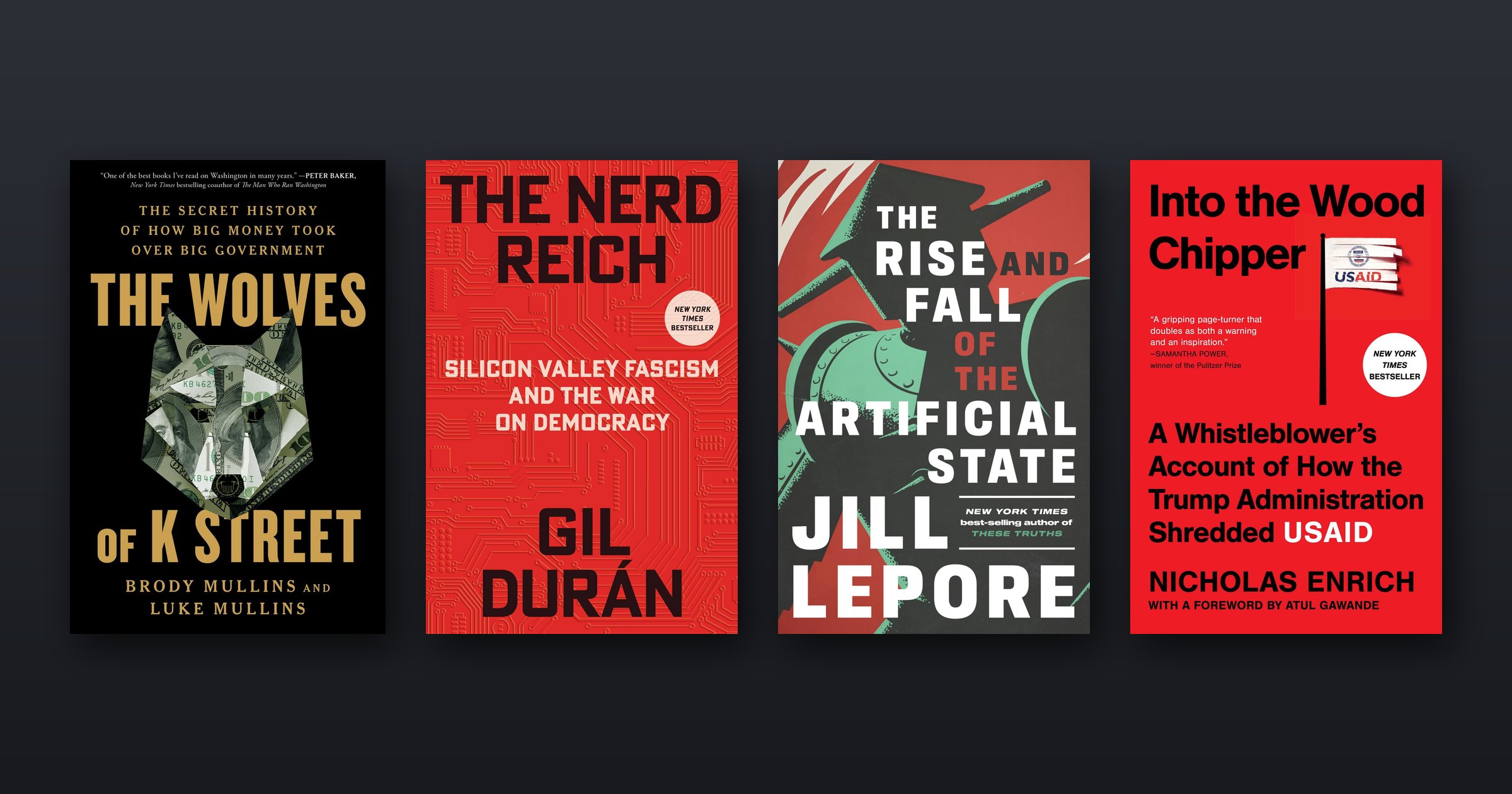
Over the past few weeks, I’ve read Omarosa Manigault Newman’s Unhinged: An Insider’s Account of the Trump White HouseLisa Brennan-Jobs Small FryMark Epstein’s Advice Not Given: A Guide to Getting Over Yourself, and Gail Honeyman’s fictional Eleanor Oliphant Is Completely Fine.

While it can be argued that each of these (other than Small Fry) belong in a category other than the memoir, reading each of them resulted in a lot of self-reflection on my part. Front and center was the notion of “an intimate relationship to the writer’s own memories, feelings, and emotions.”

Each had something special in it for me. While I was struggling with my bacterial infection, I had a heightened sense of my own mortality. While I only had one 24 hour period of existential dread, Amy was there beside me and let me talk openly about how I was feeling. I was reading Mark Epstein’s book at the time that I had this feeling, and many of the messages in it became more precise – and poignant for me.

As I sit at home, on a sunny day in Boulder, I realize how incredibly fortunate I am on many dimensions. It’s a cliche, but the human condition is extremely complex. Reflecting on other people’s struggles, especially in comparison to my own, generates enormous perspective for me. It is in this way that I find memoirs different (and more enriching) than autobiography.

For me, it’s not about the meaning someone else ascribes to their life, or the history a third person tells about someone, but how one’s self-reflection helps inform, enhance, and evolve the meaning I give to my life.

Entrepreneurs Unplugged – The David(s) on 9/13/18

One of my favorite public events is the CU Boulder Silicon Flatirons Entrepreneurs Unplugged series. I was the co-host for the first couple of years, sharing the interview job with another Brad (Bernthal) who now is generally on his own.

On Thursday, 9/13/18 at 5:30pm, Bernthal will be interview David Cohen and David Brown, the co-CEOs of Techstars (who we often fondly refer at Foundry Group as the “the David(s).” The event will be held at the CU Boulder Law School.

If you know the David(s), I expect this will be a treat as I know Bernthal will start with their early entrepreneurial career (Pinpoint) and stick with it for a while. While many people know the Techstars story, the PinPoint story is much less well known but equally fascinating. And, if you need any hints on Q&A (which Bernthal always leaves time for), just drop me a note.

Two Weeks Ago …

On the afternoon of 8/21, I had a Foley Catheter put in. I didn’t think I was going to die (that was the afternoon of 8/22), but I did think I was going to explode.

I feel better today. Not 100%. But on the mend. But two weeks ago I was in the midst of a blooming E. Coli infection that started Sunday 8/19 and probably came from some fruit and vegetables I bought at the Aspen Farmers Market on Saturday. Note to self – always, always, always wash your fruits and vegetables carefully.

By Thursday, 8/23 I was very sick. So I canceled everything on my calendar through yesterday. I addition to my dance with E. Coli, I am healing from a bone bruise I have on my left tibia and something miserably wrong with my right shoulder – both which came from a tumble down the stairs on July 16th.

Yeah – it’s been a physically shitty summer. Not just for me, but for lots of people in my world. A friend with liver cancer. Another friend in the ICU for a few days. Another friend with a messed up knee from a fall. Several big marital struggles. Lots of “we are 45 – 55 and stuff is starting to break” going on. No one close to us died this summer, but we had a few days of real uncertainty in the mix.

My worst day was the one where I had borderline sepsis. I always thought the acronym for sepsis was telling, but it’s not until you are on the edge of it that it really hits home.

S – Shivering, feeling very cold or having a fever
E – Extreme pain or discomfort
P – Pale or discolored skin
S – Sleepiness, difficulty rousing
I – “I feel like I may die,” a feeling like you’ve never felt before
S – Short of breath

Fortunately, all of that passed within a few days after they bombed me with IV antibiotics, but then I was completely exhausted for a week. For whatever reason, my shoulder pain intensified during this time period and between my new friend Foley and the pain, I couldn’t sleep. Within a few days, it was pretty easy to see the struggle one goes through with chronic pain or illness, something I’ve been spared my whole life.

Yup – it was a miserable two weeks.

Amy was incredible. I playfully tease her about her school motto, Non Ministrari sed Ministrare (Not to be ministered unto, but to minister), but it is remarkably accurate. She’s always been amazing in a crisis – any crisis – and shows up fully for whomever is in need. For two weeks, I got her continual, endless, and wonderful attention. I’m not sure how I would have handled the two weeks if I was alone.

A friend recently said, “Your real friends are the ones who show up in a crisis.” I count myself lucky – a lot of people showed up the past two weeks. While Foley is gone, I have plenty of healing to do in front of me. We are heading back to Boulder for the rest of September and I’m just planting myself in one place, doing only what I have to do, and getting healthy.

Will Someone Please Tell Me Exactly What a Looking Glass Can Do?

A few weeks ago I wrote about the launch of the Looking Glass, a desktop holographic display made for 3D creators. Since then, over a thousand people have purchased a Looking Glass for their desks. I think part of the reason for this attention is that the Looking Glass is filling a much-needed hole in the REPL for Hardware flow alongside additive and subtractive desktop 3D printers and laser cutters. It also helps that the Looking Glass works without a VR or AR headset.

If you have ever used a 3D printer, has Unity, Maya, or Blender on your computer, or isn’t scared by terms like “volumetric video” and “light-field photography”, you should probably have a Looking Glass. For 48 more hours, you can get one of your own for 25% off here.

It’s right around this point in the post that I can hear the skeptics asking themselves (reasonably), “But what can the Looking Glass do right now”? It’s a question that comes up a lot in the area of new human-computer interfaces, one of my favorite Foundry Group investment themes particularly because it lives on the edge of the comfort zone. The same question famously came up repeatedly for the personal computer back in 1983, answered by this Apple ad.

Rather than waiting for a killer app on the horizon, the crew at Looking Glass Factory are taking a page from the early-Apple playbook and answering this challenge with a daily flow of new holographic applications. They’re aiming to get to 100 practical (and in some cases not practical but joyful) things a 3D creator can do with their Looking Glass by the time most of the units ship in December. Here are just a few that have come out over the past few weeks:

WYSIWYG preview of 3D models before 3D printing.

Exporting 3D scenes directly from Autodesk’s Maya – and soon supporting a live viewport direct from Maya into a Looking Glass.

Ramping up other integrations for other 3D creation programs like Blender.

Voxatron in the Looking Glass: this is a voxel-based engine that was developed by an indie game developer Joseph White in Tokyo. What’s remarkable about this is that Joseph started to develop Voxatron back in 2004 on the belief that one day a holographic display would exist to house it. I really like how in this example a tiny bit of code generates a holographic app in a Looking Glass.

Display of 3D architectural models.

Photogrammetry drone scans of a terrain.

And this completely impractical but joyous sloth captured with an iPhone X.

I have a feeling this is just the beginning and I believe this team and the community of 3D creators coalescing around the Looking Glass are going to blow past 100 holographic apps and integrations very quickly.

To see for yourself, head over to the Looking Glass Kickstarter launch. The Standard Looking Glass is normally $600, but you can pick one up for $450 if you grab one of the last units in the next 48 hours.

And as the Looking Glass founders Shawn and Alex say, thanks^3.

Deleting Facebook

Yup. I’m done with Facebook. However, it’s tough to delete your account. Read the message above. I exited out of this screen, suspended my account instead, but then went back 15 minutes later and actually deleted it. Well – I started the deletion process. I don’t know what day I’m on, but I think I’m close to 14 days. So, I’m still “deleting” apparently.

The only inconvenience I’ve noticed so far are all the sites where I used Facebook as the sign-on authenticator (rather than setting up a separate email/password combo.) I think I’m through most of that – at least the sites I use on a regular basis. For the first few days, I accidentally ended up on the Facebook login screen which was pleasantly filled out with my login beckoning me to log back in. I resisted the siren song of restarting my Facebook account before the 14 days was up.

I have never been much of a Facebook user. About once a year, I try to get into it, but I always stall out and use it as a broadcast-only network for my blog and links that I find interesting. I went through a phase of tightening up my security, pruning my friends, using it more frequently from my phone, deleting it from my phone, checking daily in the morning (as part of my morning routine – which has evolved a lot since I wrote this post in 2007), and then giving up again and never looking at it.

Recently, I decided to rethink Facebook, Twitter, and LinkedIn. Facebook was the easiest. While it had already become a walled garden, I suddenly noticed that the walls we were going up very high, being justified by Facebook’s new effort to get all their privacy and data issues “under control.” For example, you can no longer automatically post your Tweets to your Facebook profile.

And, Facebook recently killed automatic WordPress publishing to Profiles. So, my one (and only) current use case for Facebook, which is to broadcast from my blog, disappeared. Sure, I could create a public page, go through all the authentication stuff, and theoretically post to my new public followers, but who cares. If they are really interested in what I write, they can subscribe to my blog or follow me on Twitter (at least for now, until I figure out how I’m going to engage with Twitter long-term.)

Lanier’s Ten Arguments for Deleting Your Social Media Accounts Right Now tipped me over into thinking harder about this. Now that I have decided how to deal with Facebook, at least for now, it’s time to move on down the road to Twitter and LinkedIn. I’m about a month into a different way of engaging with LinkedIn and we’ll see if it sticks. When I reach a conclusion, I’ll definitely write about it.

RSS: The Persistent Protocol

One of our themes is Protocol. We’ve been investing in companies built around technology protocols since 1994. One of my first investments, when I moved to Boulder in 1995, was in a company called Email Publishing, which was the very first email service provider. SMTP has been very good to me.

We made some of the early investments in companies built around RSS, including FeedBurner and NewsGator. RSS is a brilliant, and very durable, protocol. The original creators of the protocol had great vision, but the history and evolution of RSS were filled with challenges and controversy. Like religious conflict, the emotion ran higher than it needed to and the ad-hominem attacks drove some great people away from engaging with the community around the protocol.

And then Facebook and Twitter took over. RSS Feed Readers mostly vanished, and the feed became the “Twitter feed.” After a while, Facebook realized this was a good idea, and created the “Facebook news feed.” I think it’s hilarious that the word “feed” is still in common usage – The Dixie Flatline is amused.

Over dinner, after he had become the COO of Twitter (but before he was the CEO), Dick Costolo (who had previously been the founder/CEO of FeedBurner) told me that he viewed Twitter as the evolution of RSS. At a protocol level this wasn’t true, but at a functional level (providing another way to get access to everything going on any website that was publishing content) this became true. Our investment in Gnip (which Twitter eventually acquired) helped extend this, by allowing companies to build products on top of the Twitter firehose (which was the name for the entirety of everything being tweeted on Twitter.)

Time passed. Facebook and Twitter gobbled up all the direct attention of end-users. Publishers pushed their content through Facebook and Twitter, not realizing the control over the user they were giving up to these platforms. For some reason, there was more focus for a while on Google, and how they were aggregating content. The beauty, and brilliance, of the web, started to become the walled garden of Facebook. For those of us who remembered AOL’s walled garden vs. the web (and Microsoft’s failed attempt as MSN as a walled garden), there were echoes of the past all over the place.

Some smart people started talking extensively about decentralization and lock-in right around the time that the Facebook privacy stuff became front and center. As it unfolded, and the dust settled, there was nothing new, other than a continued schism between the effort to control (and monetize) users and the effort to create broadly democratized and decentralized information. Oh – and privacy. And legitimacy (or authenticity) of information, much of which is wholly subjective or imprecise anyway.

In the middle of all of this, Wired’s Article It’s Time For An RSS Revival caught my attention. I’ve been using RSS continuously for over a decade as my primary source of information. My current feed reader is Feedly, which I think is currently the best in class. It’s one of my primary sources for information that informs me, is private, and allows me to control and modulate what information I look at.

While RSS has disappeared into the plumbing of the internet, there’s still something fundamental about it. Its durability is remarkably impressive, especially in the context of the lack of the evolution and perceived displacement of the protocol over the past few years.

The tension between walled gardens (or lock-in, or whatever you want to call it) and a decentralized web will likely never end. But, it feels like we are in for another significant turn of the crank on how all of this works, and that means lots of innovation is coming.

Every Generation Learns The Same Lessons

While it’s easy to tell people things, it’s much more powerful to learn things. And, as I get older, I see the same lessons being learned by subsequent generations. While this isn’t a post that says “everything is the same as it was before”, there are foundational lessons in life that play out over and over again.

I spent the weekend with a friend from the last 1990s who was the lead banker on the Interliant IPO (I was a co-founder and co-chairman.) Last night, at the Aspen Entrepreneurs event, I was asked to describe several failures and I rolled out my story about Interliant, which, for a period of time (1999 – 2000) appeared to be hugely successful before going bankrupt in 2002. If you like to read IPO prospectuses, here’s the final S-1 filing after INIT went effective and started trading on July 8, 1999.

A few days ago, Fred Wilson wrote a post titled Capitulation? In the middle, he’s got a sentence about the theme of the post.

“Now, the crypto markets are in the eighth month of a long and painful bear market and we are starting to see some signs of capitulation, particularly in the assets that went up the most last year.”

On January 16, 2018 (almost seven months ago) I wrote a post titled It Can All Go To Zero. While I included a lesson from the Interliant experience, I highlighted the top 10 crypto prices, which had already fallen 30% – 50% from their high points a few weeks earlier.

Compare those to the prices right now.

Bitcoin is down another 50% (from 12,001 to 6,157). Ethereum is down over 75% (from 1,118 to 264). XRP, holding strong as the third most valuable cryptocurrency, is down 81% (from 1.37 to 0.26). Stellar, which rallied from #9 to #5, is only down 55% (0.49 to 0.22).

My guess is there are a lot of people who wish they sold their XRP at 1.37. Or, maybe around its all time high of 3.83 on January 4, 2018.

Capitulation in markets is one of those endless lessons that gets learned over and over and over again. My first moment with this was Black Monday in 1987. But that’s not when I learned the lesson. My foundational moment, where I really learned the lesson, happened during the collapse of the Internet bubble in 2000 and 2001.

It’ll be interesting to see if this is the crypto generation’s capitulation lesson moment.

The Economics of VCs Recycling Management Fees

Several years ago, I wrote a post titled Why VCs Should Recycle Their Management Fees.

From the start of Foundry Group in 2007, we have felt strongly about this. We feel that if an LP gives us a $1 to invest, we should invest at least that $1, not $0.85 (the average fee load over a decade for a typical VC fund is 15%.) Our goal for each fund is actually to invest closer to 110%, which means if an LP gives us a $1 to invest, we are actually investing $1.10.

Our long-time friends and LPs at Greenspring recently wrote a great post titled Creating GP-LP Alignment: Why Terms Matter. The post specifically discussed three items: Management Fees, Recycling, and Carried Interest.

The entire post is worth reading, but I especially liked their section on Recycling which includes a handy chart showing that recycling means that you only need to generate a 3.65x gross multiple to achieve a 3.00x net multiple to your LPs, vs. a 4.10x gross multiple if you don’t recycle. The section from their post follows:

In addition to management fees, the process of reinvesting realized proceeds into new investments, or recycling, can also meaningfully impact net returns and alignment. While management fees cut into the dollars available for investment, recycling can have the opposite effect, increasing the investable pool of capital while offsetting a proportion of management fees. To illustrate this point, we revisit our $100 million fund example, and in this case show how recycling $15 million, equivalent to the fund’s management fee, positively impacts the fund.

The fund that chooses to recycle fees requires a 3.65x gross multiple to achieve a 3.00x net multiple, whereas the fund that does not recycle proceeds to offset management fees requires a 4.10x gross multiple to achieve a 3.00x target net multiple. As long as re-invested capital is prudently deployed into opportunities capable of generating strong results, recycling is an impactful way for GPs to increase net returns, which ultimately benefits investors and themselves.

Now, imagine if you recycled 110%. Your investable capital would be $110m. You now require a 3.45x gross multiple to achieve a 3.00x multiple. Plus, as a bonus, you get $56m of carry (vs. $50m of carry in the case where you don’t recycle proceeds.)

Many fund agreements, including ours, require us to pay back all fees and expenses before taking carried interest. We think this is another element of GP-LP alignment and have supported this from our first fund. As a result, if you recycle at least 100%, it is more realistic to think of your management fee as a risk-free, interest-free loan against future carried interest, instead of additional compensation.

As a result, our goal is to generate as much of a return on the dollars invested, and get as many dollars invested as we can in each fund. Recycling allows us to do this and brings the gross and net returns closer together, reducing the spread to the carried interest from profits on investments.

While many GPs focus on their gross numbers, in the end the only numbers that really matter to LPs over time are the net multiples.

That’s worth remembering.

16-49-81

What do these numbers mean to you?

At a recent offsite, during our conversation about evolving our communication patterns (which I refer to, in my head, as “the Matrix”), Ryan said “16-49-81.” Everyone stared at him and I responded “4-squared, 7-squared, 9-squared.” Then, everyone nodded their heads but were probably thinking “these guys are numerology goofballs.”

But then Ryan said, “Metcalfe’s Law” and everyone immediately understood.

When we were just four partners, our communication matrix was 16. We added three new partners and it became 49. We recently added a General Counsel to our team and consciously included our CFO in the communication matrix, so now it’s 81.

81 is a lot different than 16. Our communication matrix is highly optimized (and something we are extremely focused on as a key attribute of what we do), but Ryan was pointing out that we needed to make sure we were paying attention to make sure we kept it clearly optimized at nine people, rather than just four.

We describe our communication and decision-making process as continuous. It happens in real time, on multiple channels, between all of us. We have very specific ways of reacting to new data which can flip quickly to a yes or no decision, rather than storing things up and making a collective decision at the end with summarized information. We have no intermediaries in our process – the seven partners are the ones interacting, with our GC and CFO now in the information flow.

There are days where it feels extremely noisy and others that are strangely quiet. This is different than a decade ago when it felt noisy all the time. I find the difference fascinating as I get used to the new surface area around the matrix.

June Launches their Second Generation Oven for $499

When Amy and I cook, we want it to be as hassle-free as possible. That’s where the June Oven comes in.

I first learned about the June Oven in 2014 and was impressed with how the June Oven was using technology to make cooking easier and more time efficient. Not only did we invest in June, but I’ve owned a June Oven for over two years.

Now four years later since I first spoke to June co-founders Matt Van Horn and Nikhil Bhogal, June has launched their second generation oven and it’s better than ever. It addition to being a convection oven, it is also a slow cooker, air fryer, dehydrator, broiler, toaster, and warming drawer.

So, with the June Oven, you get seven appliances in one which is good for both your wallet and kitchen counter space. The oven cooks the perfect medium-rare steak, air fries chicken, or bakes chocolate chip cookies. It can even cook up to a 12-pound turkey, not that I eat turkey. To do this, June does all the hard work of alternating between different modes of roast, broil, and bake to cook steak (and anything else) to your preferred doneness.

The new June Oven has never been more affordable with a limited time offer of $499 with promotional code NEW100. You can buy yours at juneoven.com.

Get your kitchen out of the past and into the future now by getting a June Oven.